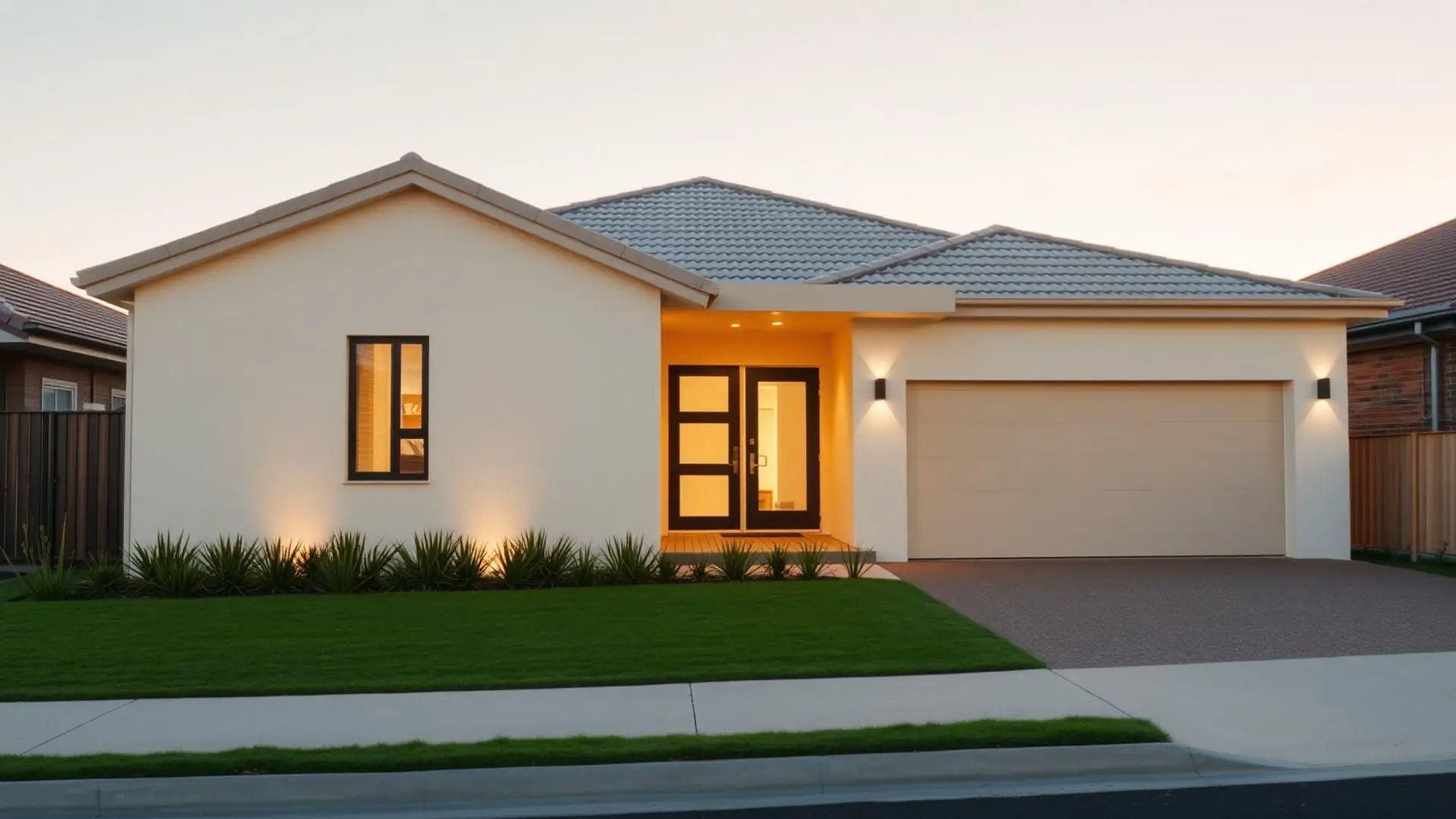
First home buyers.
Buying your first home is not only about finding the lowest advertised rate. Your deposit, purchase costs, income, existing commitments and the way each lender assesses your position all shape what you can safely buy. We model those pieces before you make an offer, so you can search with a clear price range and a finance plan that has already been tested.
- First Home Guarantee
- FHOG & stamp duty concessions
- Off-the-plan purchases
Start here
Tell us your scenario and we will come back with real options.
Book a call Model borrowing powerNo cost to you for standard residential lending. We are paid by the lender once your loan settles.
70+ lenders
One application, whole panel
Same week answers
Pre assessment in days
Written comparisons
Numbers, not sales talk
Australia wide
Remote friendly process
The numbers
- Typical loan size
- $350k to $900k
- Deposit range
- 5% to 20%
- Maximum LVR
- up to 95%
- Pre approval time
- 3 to 10 business days
- Lender panel
- 70+ lenders
- Our fee to you
- $0
5% possible under eligible guarantee schemes
LMI applies above 80% unless a guarantee applies
we are paid by the lender on settlement
Figures are indicative guides based on current lender policy across our panel and are not an offer of credit. Your own loan size, rate and structure depend on your income, deposit, credit history and the property.
Deposit planner
See what your first home deposit could look like.
Adjust the property price and deposit percentage to compare the cash deposit, loan amount and loan to value ratio.
- Cash deposit
- $70,000
- Estimated loan
- $630,000
- Loan to value ratio
- 90%
Australian Government 5% Deposit Scheme
This price and deposit sit within the broad settings shown for Queensland.
The scheme needs a minimum 5% deposit, and both the purchase price and lender valuation must be within the limit. Exact area treatment depends on the property postcode.
First Home Owner Grant
Established homes usually do not qualify for the First Home Owner Grant.
Grant amounts, value limits and residence rules vary by state or territory and must be checked against your contract.
Scheme limits verified 1 July 2026. Check the exact current limit for your postcode using the official property price cap checker.
This is an illustrative deposit estimate, not a lending assessment. Stamp duty, conveyancing, inspections and other purchase costs may need to be funded separately. Scheme and grant results are general guides only, not eligibility confirmation. Eligibility, lenders mortgage insurance and approval depend on your full circumstances, exact postcode, contract and lender policy.
Check my positionBeyond the deposit
You also need cash for the costs around the purchase.
The deposit gets all the attention, but transfer duty, conveyancing, inspections and the smaller legal fees all have to be paid in cash, and usually by settlement day. Lenders do not lend these amounts, so they come out of your savings on top of the deposit you have saved. Planning for them early is the difference between a calm settlement and scrambling for money in the last week of a contract.
Transfer duty
A tax charged by the state or territory where the property sits, calculated on the purchase price. First home buyer concessions can reduce it or remove it entirely, depending on where you buy and what you pay.
Roughly $13,000 to $28,000 on a $700,000 home before any concession
Payable by settlement day in most states and territories
Conveyancer or solicitor
They review the contract, search the title, chase the council and water records, move the money and register the change of ownership. Their fee does not usually include the search costs, which are billed separately.
$1,000 to $2,500 in fees, plus $200 to $600 of searches
A deposit upfront, the balance at settlement
Building and pest inspection
A licensed inspector checks the structure for defects and for timber pest damage. The report gives you something to negotiate on, or a reason to walk away, while you still can.
$400 to $900
Before you remove the finance and inspection conditions
Stratum and body corporate checks
For a unit, townhouse or villa, your conveyancer reviews the owners corporation records, insurance and levies so you are not buying into an underfunded building.
$100 to $300
Within the contract period
Lender application costs
Application, valuation and document fees. Many lenders waive these and some only charge a valuation when they order one themselves, so the cost is part of comparing loans.
$0 to $600
During the application
Lenders mortgage insurance
This applies when you borrow more than 80% of the property value. Most lenders carry the cost and reflect it in the interest rate you are quoted, though some loans add it to the amount you borrow.
Usually built into the rate rather than paid in cash
Arranged before settlement
A simple way to size it
Set aside 3% to 5% of the purchase price for costs, on top of your deposit.
On a $700,000 home that is $21,000 to $35,000. Keep it somewhere you can reach it quickly, not in shares, a term deposit or a notice account you cannot break without a penalty. Settlement dates do not move because your savings are locked up.
Check what I can fundThe costs people forget until the last month
- Building insurance that starts on settlement day, when the property becomes your risk
- Removalists, temporary storage and any immediate repairs or safety upgrades
- Connection fees for electricity, gas, internet and water, plus a rates or levy adjustment
- Council or water deposits and, for a new build, the final progress payment gap
Three things to do early
- 1Get a duty estimate from the state or territory revenue office before you make an offer, and check whether a first home buyer concession or exemption applies at that price. Every revenue office publishes its own calculator.
- 2Ask two or three conveyancers for a written quote that shows the fee and the search costs separately, so you are comparing the same thing.
- 3Ask your lender which application, valuation and document fees apply on the specific loan you are comparing, and get it in writing.
Read next
Cost ranges are general guides for a typical residential purchase and vary by state, territory, property type and provider. Duty is calculated by the relevant state or territory revenue office and concessions have their own conditions. Always confirm the exact figures for your contract before you commit.
What we do
We start by mapping every part of your available funds, including savings, gifts, grants and any amount you need to keep aside after settlement. We then check your potential eligibility for relevant Australian Government guarantee schemes, the First Home Owner Grant and state based stamp duty concessions. Once the numbers are clear, we compare suitable lenders on borrowing capacity, policy, fees, rate and loan structure. You receive a written comparison of the shortlist rather than a single recommendation you cannot check.
Building the right deposit plan
A 20 percent deposit generally avoids lenders mortgage insurance, but it is not the only path into a first home. Eligible first home buyers may be able to purchase with a deposit from 5 percent through the Australian Government 5% Deposit Scheme, while other lenders allow smaller deposits with lenders mortgage insurance added to the loan. We compare the available paths, the cash required and the likely monthly repayment so you can decide whether buying sooner or continuing to save is the stronger option for you.
First Home Owner Grant
The First Home Owner Grant is a state or territory payment, not a loan guarantee. It generally supports eligible buyers purchasing or building a new home, while established homes usually do not qualify. The amount, property value limit, residence requirement and definition of a new home vary across Australia. We check the rules applying to your buying location and contract date, then show how an available grant may contribute to settlement funds without treating it as guaranteed until eligibility is confirmed.
Australian Government 5% Deposit Scheme
The Australian Government 5% Deposit Scheme is the expanded program previously known as the First Home Guarantee. It can allow an eligible first home buyer to purchase with a deposit from 5 percent without paying lenders mortgage insurance because the Australian Government guarantees part of the loan. Property price limits apply by location and both the purchase price and lender valuation must sit within the relevant limit. You must also meet the scheme rules, live in the property and obtain approval through a participating lender. It does not provide cash toward the purchase and it does not remove the need to meet normal lender servicing and credit checks.
Family guarantor lending
A family guarantor arrangement is not a government scheme. A suitable lender may allow a family member, commonly a parent, to provide a limited guarantee secured against equity in their own property. This can reduce the cash deposit required and may avoid lenders mortgage insurance, but the guarantor accepts a real financial and legal risk if the borrower cannot meet the loan. We explain how a limited guarantee can be structured, how it may be released later and why every guarantor should obtain independent legal and financial advice before proceeding.
Allowing for costs beyond the deposit
Your deposit is only one part of the cash required. Conveyancing, building and pest inspections, government registration charges, lender fees and moving costs can sit outside the loan. Stamp duty may also apply depending on your state, the property value and the concessions available to you. We build these items into the plan and keep a sensible cash buffer aside, rather than using every available dollar at settlement.
How lenders assess your application
Lenders do not all read income and expenses in the same way. Overtime, allowances, bonuses, casual employment, HELP debt, credit card limits and existing personal loans can produce a different result from one lender to the next. Genuine savings requirements also vary, particularly when your deposit is below 10 percent or includes a family gift. We place the application where your circumstances fit the policy, not simply where the headline rate looks lowest.
From pre approval to settlement
We organise the supporting documents, submit the application and explain any conditions attached to the pre approval. When you find a property, we coordinate the valuation and formal approval with your conveyancer or solicitor and selling agent, then stay across the loan documents and settlement booking. Pre approval commonly takes 3 to 10 business days and formal approval after an accepted offer commonly takes 5 to 15 business days, depending on the lender, valuation and complexity of the application.
Common questions
First home buyers questions, answered.
The questions clients ask us most about first home buyers, answered the way a credit assessor reads your file.
All FAQs


